
Career Highlights
Baseball:
North Carolina Negro High School Baseball Association state champion with Reid High School, 1954-55. Offered scholarship to Winston-Salem State University.
Semi-pro player
Tried out for Major Leagues
Member of Belmont Sports Hall of Fame
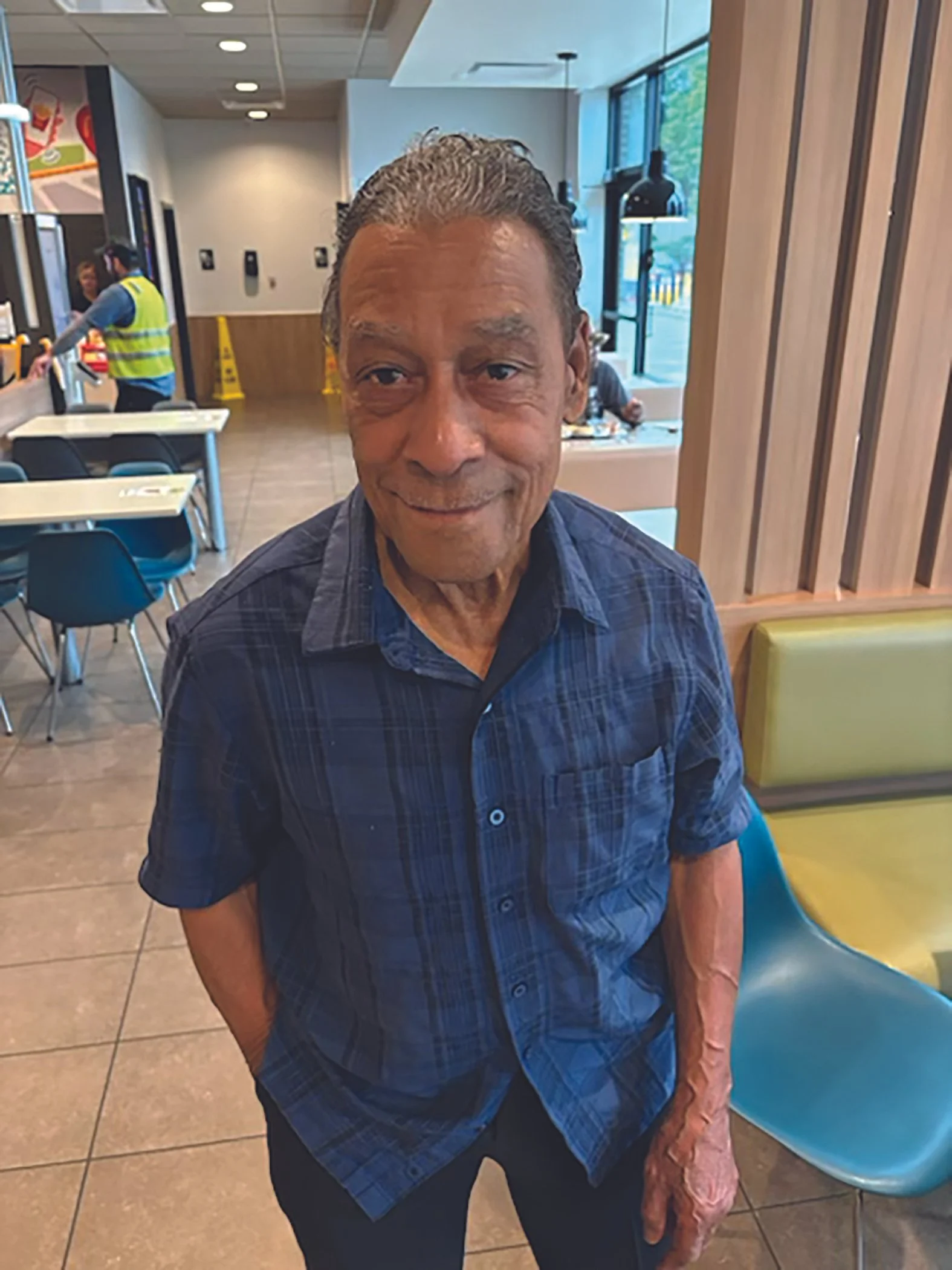
Willie Hancock
Willie Hancock knew baseball before baseball became new
Willie Hancock remembers baseball the way it used to be.
When the Dodgers still played in Brooklyn, and Jackie Robinson – the first Black American in the majors – ruled first base.
When the playbook was different, before Major League Baseball decided, in 1969, to upend the rules and lower the pitcher’s mound, narrow the strike zone and, in 1973, add the designated hitter.
Hancock, 86, played before all that, in childhood pickup games backstopped by his family’s cement steps, in Junior League in elementary school, at Reid High School in Belmont and, later, in a league where opposing teams included Hank Aaron and Harmon Killebrew.
“The game back then, it seemed to me like it was better,” he says. “The kids playing Major League ball now, I don’t even know ‘em. Now it’s called the new Major League Baseball, because they have different rules. It’s a changed game.”
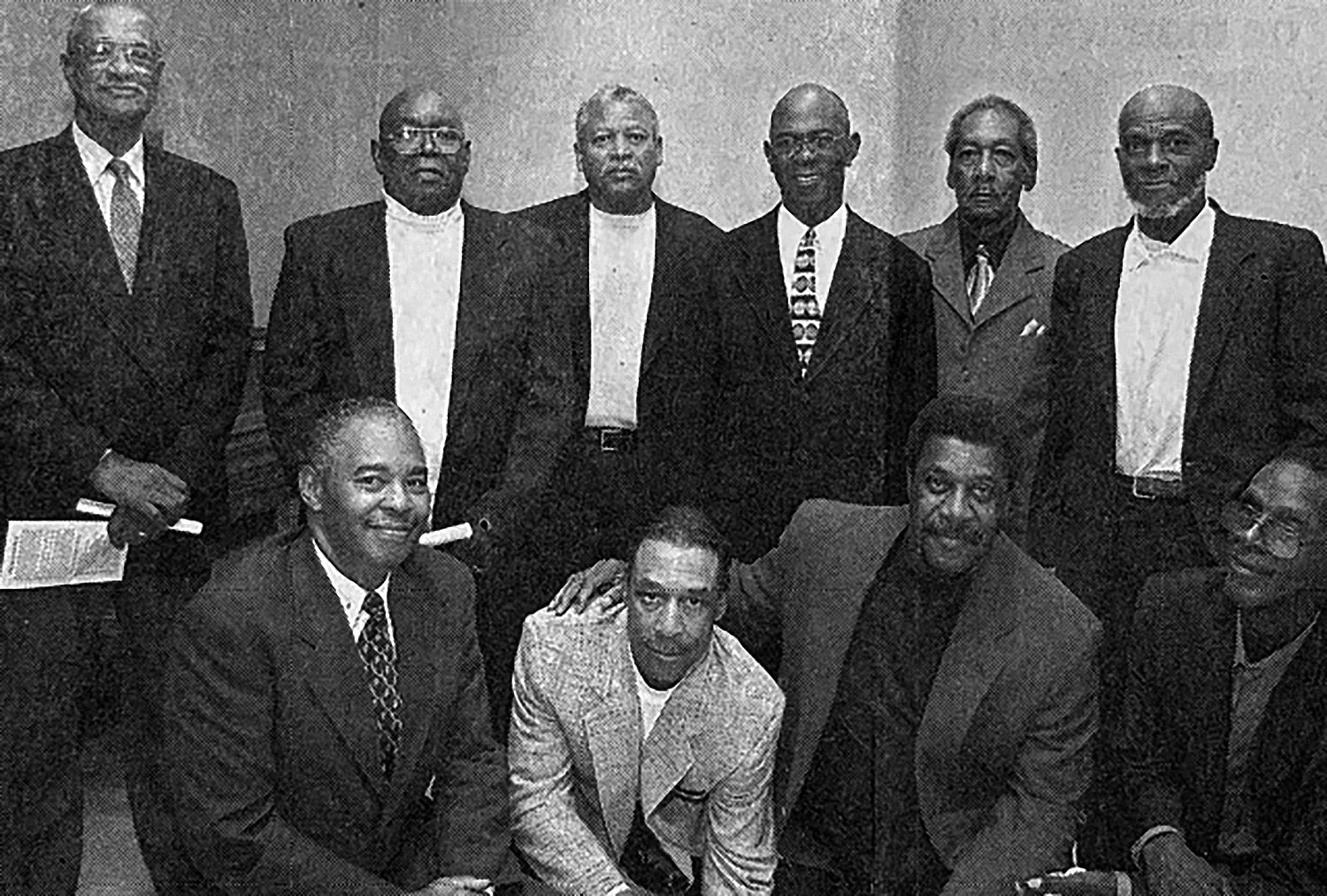
This year, Hancock, a lifelong Mount Holly resident, joins the Mount Holly Sports Hall of Fame. He was a 2003 inductee in the Belmont Sports Hall of Fame along with his 1954 and ‘55 Reid High teammates who won back-to-back North Carolina Negro High School Baseball Association state championships.
In their state championship team photo, Hancock is front row, center, his ballcap in one hand, the trophy in the other.
“I could hit the ball 400 feet. I was more of a power hitter, and I’d hit it down the leftfield line,” he says. “I hit a lot of home runs.”
Hancock attended Mount Holly’s A.M. Rollins Elementary through eighth grade. After high school, he had an eye on Winston-Salem State University. So did his sisters, one wanting to be a nurse, the other a teacher. “My father said, ‘I’m sorry, son. If you want to go to school, you’ll have to get a job and work your way in.’ But they gave me a baseball scholarship. I didn’t go. One reason was, I got a job at Duke Power.”
He stayed at Duke Power 32 years, where he worked on transformers at a substation.
He also continued to indulge in baseball.
A man named E.L. Dunn organized a five-team Gaston County Negro League in the late 1940s, which lasted a decade or so until baseball no longer was restricted by segregation. Hancock played in that league, for the Belmont Blues, as did Reid High player Carl “Satch” Forney who later spent a year with the St. Louis Cardinals and seven years with the Indianapolis Clowns of the Negro League, the team that included Hank Aaron.
Hancock joined the Hoskins Giants, a Negro League team in Charlotte, and won several Golden Glove awards. He used a 35-inch Louisville Slugger, and recalls being asked why a smaller man like himself needed a big bat. “I swing hard,” he said.
“I remember one game we were playing at Paw Creek and they hit a line drive and I jumped way up in the air and caught it, and when I was on the ground I showed them the ball, and it was in my glove,” he says.
At another game at Griffith Park (later renamed Crockett Park), Hancock says he made a trip back to the locker room before the game began, and discovered he had fans.
“I had to back to the dressing room, and had to pass by the ticket line and there were about 15 women in line,” he says, “and one of them asked the ticket seller if I was playing that day. And the man said, ‘That’s Willie right there.’ And every one of them got tickets. I couldn’t believe that. They came to see me play ball. I don’t know why, but they wanted to see me play.”
Longtime acquaintance Joy Walker remembers those games.
“I’ve known Willie Hancock through my family, since he’s much older than I am,” she says. “When I attended the Hoskins games, I would always hear his name being called by the spectators. Then a quiet, serious Willie would walk out on the field.”
While playing semi-pro, Hancock says, he went to a tryout camp along with second-baseman Tommy Helms, who had attended West Mecklenburg High School in Charlotte.
“I was at the same camp with Tommy, and they gave him the contract,” Hancock says. “The man said, ‘I’m sorry; if I had another contract, you’d get it.’ Well, Tommy got the contract. Everybody wanted to know why I didn’t get it.”
Helms played in the majors 13 years, with the Cincinnati Reds, Houston Astros, Pittsburgh Pirates and Boston Red Sox. He managed the Reds in 1988-89.
“Willie says a guy told him he was too good to play around here,” Walker says, “that he needed to play in the major leagues. He remembers when players came up to bat, they were told not to hit the ball toward shortstop because Willie was that good.”
Of all his baseball accomplishments, Hancock’s favorite memory is a game when he was in the bleachers, not on the field.
“The Dodgers. They’re my team. I’ve been pulling for the Dodgers ever since Jackie Robinson played for them,” he says. “Years ago, my daddy took me to see the Dodgers, and Jackie Robinson was playing with them.”
They were in Brooklyn then. The way baseball used to be.